
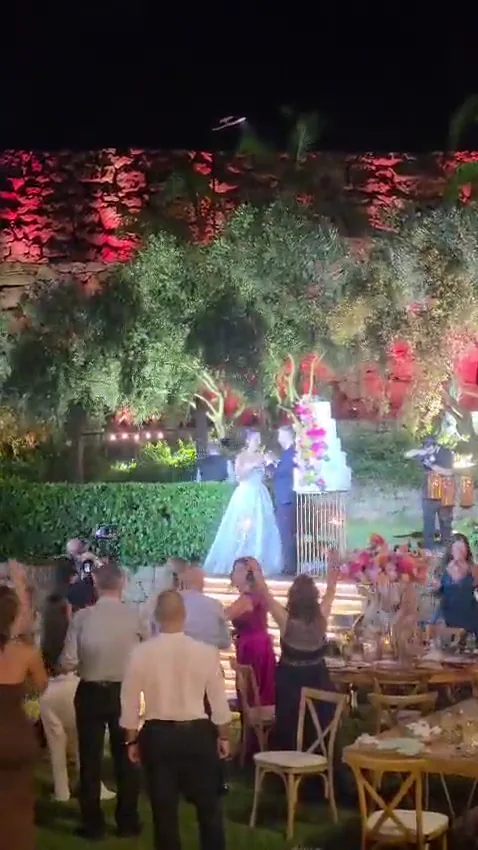
Cake cutting with sparklers · Wedding, night Bouquet time · Wedding, night
Map your wedding music across the day
Think of the day as an energy curve. It starts calm at the ceremony, peaks for the zaffe, softens for the first dance and dinner, then builds to the dance floor and the last dance. Planning each stage on its own stops the music from feeling random.
1. Ceremony — Soft instrumental music for the prelude, then the processional and recessional as the only fixed cues
2. Cocktail hour — A warm background mix at conversation volume, with familiar Lebanese, French and English favorites
3. Zaffe — Drums and a joyful build as the couple enters, the first big moment of the day
4. First dance — One song chosen by the couple, often edited to the length they want
5. Dinner — Low, steady background music that never competes with conversation
6. Dance floor — Crowd favorites in Lebanese, English, French and Egyptian hits, building toward the peak
7. Last dance — A song everyone knows, announced so the whole room joins in
The order changes with your venue and family traditions. Some couples hold the zaffe after the ceremony, others at the reception entrance. A good DJ builds the timeline around your day, not the other way around.
Ceremony and cocktail-hour selections
The ceremony needs the fewest songs and the most care. Three musical cues matter:
• Prelude: Soft instrumental music while guests arrive and take their seats.
• Processional: The song for the entrance of the bridal party and the bride. Choose it early, and decide who gives the signal to start.
• Recessional: A joyful, upbeat song for the exit that tells guests the celebration has begun.
Confirm what music your church or officiant allows before you finalize the list, and test the microphone for the vows and readings. Nothing disturbs a ceremony faster than a voice nobody can hear.
Cocktail hour. This is where the reception starts, so keep the music warm and at conversation volume. Guests are greeting each other, taking photos and finding their tables, and they should never have to shout.
• Pick familiar melodies that both older and younger guests recognize
• Blend Lebanese, French and English classics to match your guest list
• Save the high-energy dance tracks for later
• Raise the energy slightly in the last 10 minutes so the room is ready for the zaffe
Dinner background versus dance-floor energy
Dinner and dancing need opposite things from the music, and mixing them up is the most common timeline mistake I see. Dinner is for conversation. The dance floor is for momentum.
Aspect — Dinner — Dance floor
Volume — Low, so every table can talk — Loud enough to feel the beat, never painful
Tempo — Slow to medium and steady — Medium to fast, building in waves
Songs — Familiar melodies, mostly instrumental or soft vocals — Crowd favorites everyone can sing along to
DJ's job — Stay in the background — Read the crowd and keep the momentum
Dinner. Keep the volume low enough that guests at the far end of the table can talk without leaning in. Avoid sudden peaks, and lower the music before anyone speaks into the microphone.
Opening the dance floor. Start with songs nearly everyone knows, so the first guests stand up with confidence and others follow. Save the biggest songs for the peak, not the first ten minutes. I read the crowd and its ages all night, and I mix Lebanese, English, French and Egyptian hits so every table has something to dance to.
Timing the first dance, zaffe and key moments
The big moments are short, so timing matters more than the song list. Plan these with your DJ in advance:
• Zaffe: Usually 10 to 15 minutes, depending on the route and the group. Agree on the start point, the path to the entrance and the cue between the drummers and the DJ, and test the sound at the entrance beforehand.
• First dance: One song, often 2 to 4 minutes. Ask your DJ for an edited version, so you are not dancing alone through a long introduction or outro.
• Cake cutting: About five minutes. Choose one short song and announce it at a pause in the music so guests gather.
• Last dance: One song everyone knows. Announce it so guests join in, and end the night on a high instead of letting the music fade away.
Write the order down and choose one person, such as the planner or the groom's witness, to give the DJ the signal for each moment. Share the final version a week before the wedding.
Working with your DJ to keep it seamless
A seamless wedding is the result of preparation your guests never see. This is how I work with couples:
• Meet early. Share your date, venue, schedule and guest mix. Before every wedding I ask the couple about their guests, because the music should match who is in the room.
• Send your lists. A must-play list, a do-not-play list and the exact versions of the songs for the fixed moments.
• Share a written running order. Times, cues and who gives each signal.
• Plan the technical details. Microphones for the ceremony and speeches, sound at the zaffe entrance, power, and the venue's sound limits, with a sound check before guests arrive.
• Prepare for the unexpected. Confirm your DJ has backup equipment and every song saved offline.
• Leave room for the read. A plan gives structure, and a good DJ still adjusts the dance floor to the room on the night.
Planned this way, the music never calls attention to itself. Guests simply feel that the day flows from the first song to the last dance.
Frequently asked questions
How many songs do I need to choose myself? — Only the fixed moments: the processional, recessional, zaffe, first dance, cake cutting and last dance. Share a must-play list and a do-not-play list, and let your DJ handle the rest.
When should the dance floor open? — Usually after dinner and the main speeches, once guests have eaten. Some couples open it earlier with the first dance and a short dance set before dinner. Your DJ can adapt this to your guests.
How early should I meet my DJ? — At least four to six weeks before the wedding, and earlier for popular dates. That leaves time to finalize the song list and the running order.
Can I mix Lebanese and international songs? — Yes, and it works well for mixed families. The balance depends on your guests' ages and backgrounds, so tell your DJ who is attending.
What is a zaffe? — The zaffe is a traditional procession with live drums and music that announces the couple's entrance. It is a signature moment of Lebanese and Arab weddings.